The Recruiter Is Not Dead. But the Old Playbook Is.
AI isn't replacing talent acquisition — it's rewriting it from the ground up. Here's what smart agencies are doing differently right now.

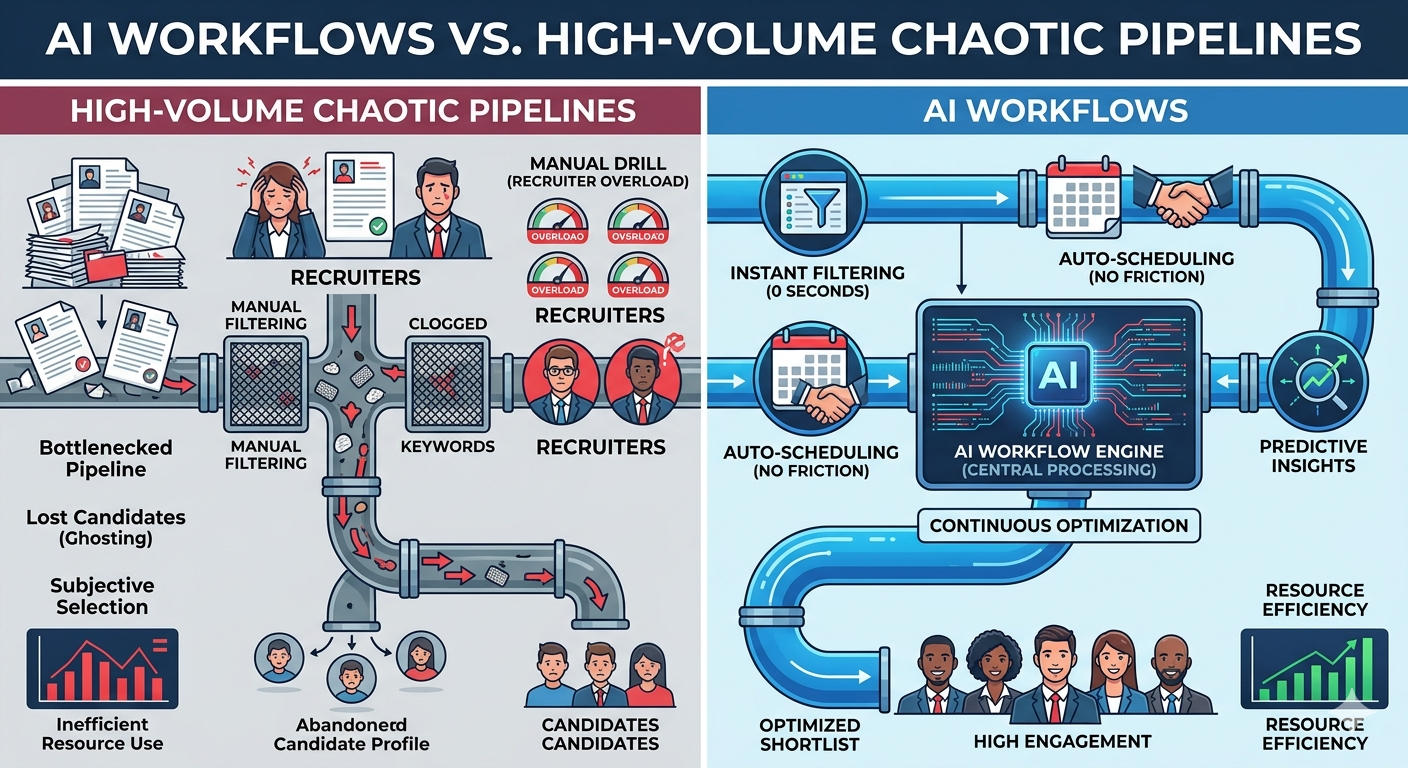
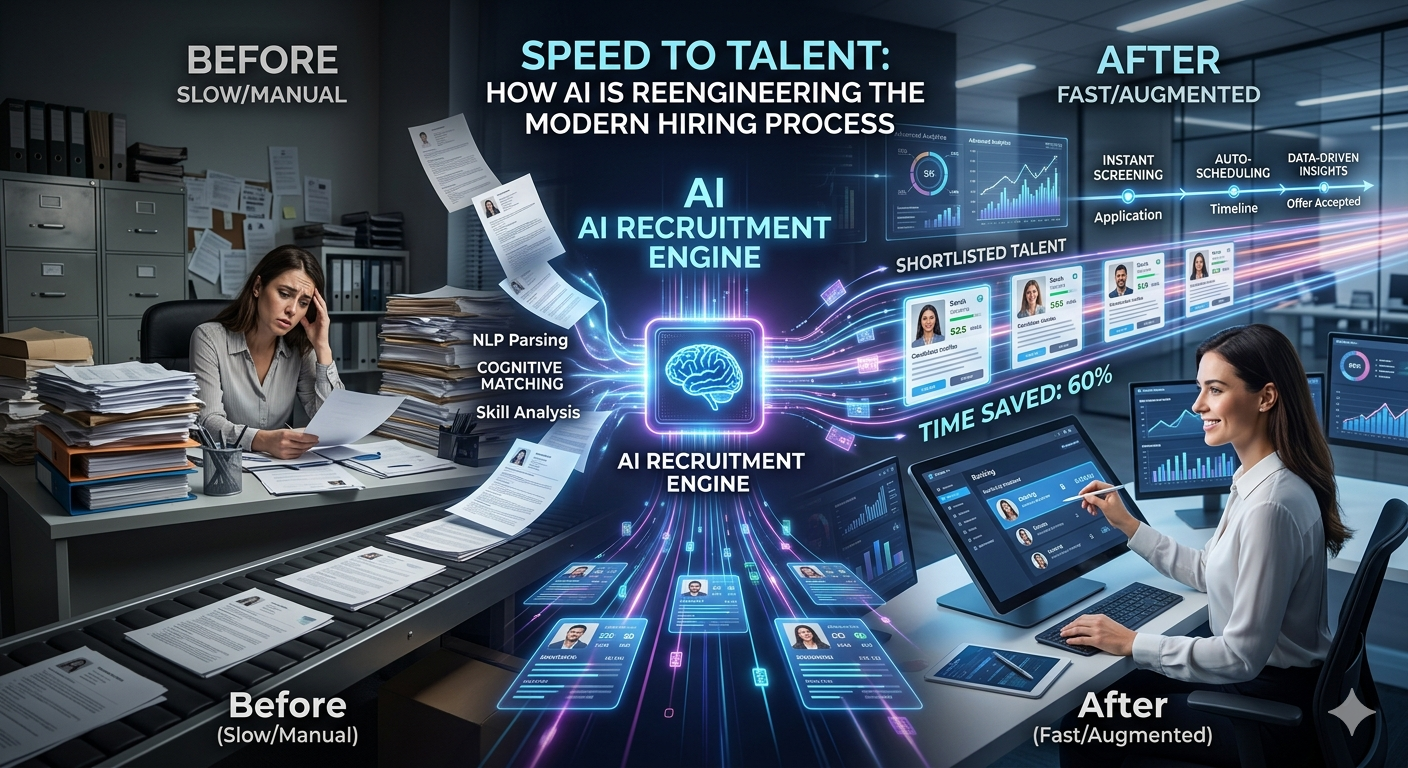
Picture this: a mid-size recruitment agency in Amsterdam, handling 200+ open roles simultaneously. Two years ago, that meant a team of 12 burning through LinkedIn filters, copy-pasting CVs into spreadsheets, and spending half their week on emails that never got replied to. Today, they run the same volume with a leaner team — and close roles 40% faster.
The difference? They stopped fighting AI and started building with it.
75% reduction in time-to-shortlist with AI screening
3× more candidate reach per recruiter per week
60% of top candidates never applied — AI finds them
The Old Way Was Broken (We Just Didn't Say It Out Loud)
Let's be honest. Traditional recruitment was always part science, part guesswork, and a lot of gut feeling dressed up as expertise. Keyword scanning resumes. Judging candidates on a 45-second first impression. Sourcing from the same talent pools everyone else was fishing in.
The best recruiters knew how to work around these limits. They built relationships, read between the lines, spotted potential where a job description couldn't. But they were still chained to manual, repetitive work that ate their most valuable hours.
"AI doesn't replace recruiter judgment. It gives recruiters back the time to actually use it."
What AI Actually Does in a Modern Agency
Forget the sci-fi image of a robot making hiring decisions. The real transformation is more practical — and more powerful.
Intelligent sourcing
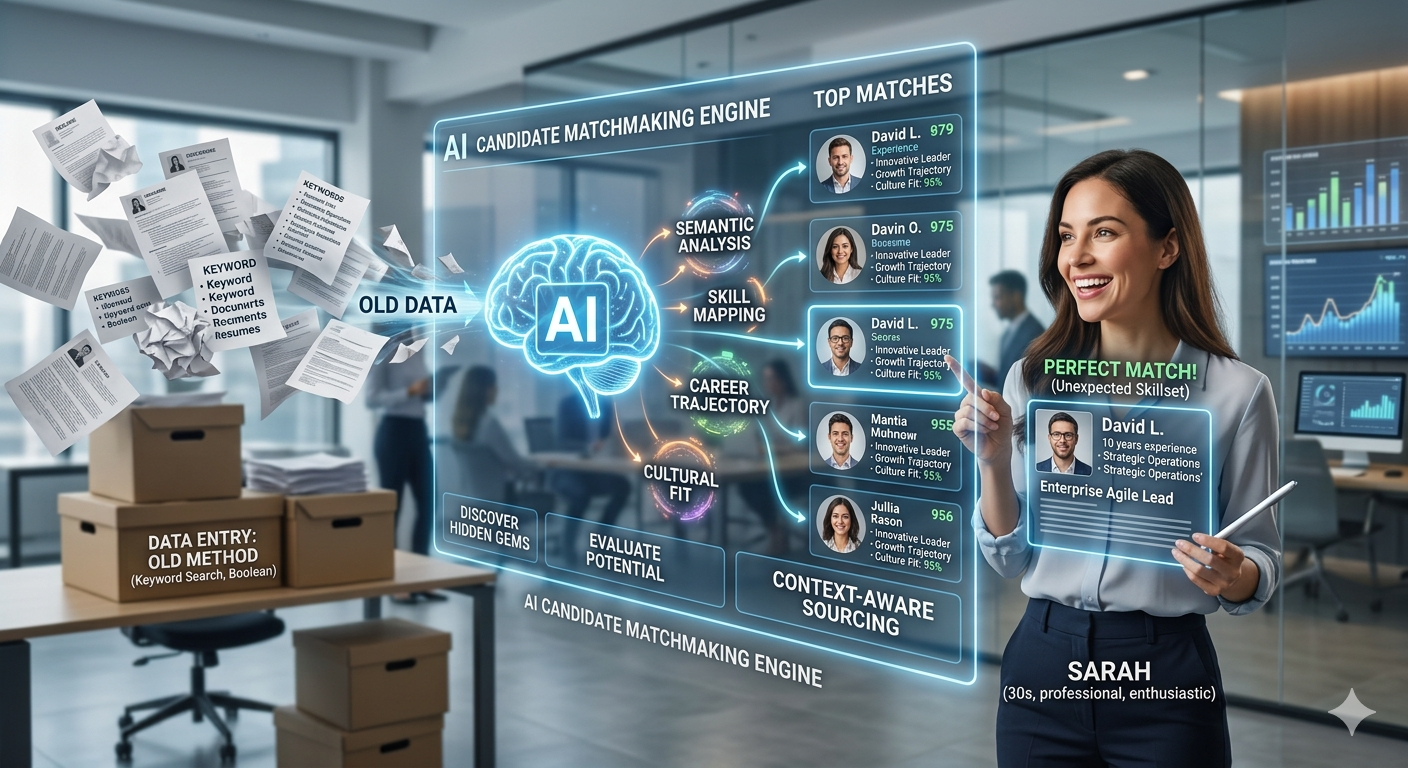
AI scans platforms, forums, GitHub, and professional networks to surface passive candidates who've never touched a job board.
CV screening at scale
Natural language models rank applicants against role nuance — not just keywords — in seconds, not hours.
Automated outreach
Hyper-personalised first-touch messages sent at scale, with AI adjusting tone based on the candidate's profile and activity.
Predictive fit scoring
Models trained on placement data predict not just who's qualified, but who's likely to accept, stay, and thrive.
The compound effect is massive. When AI handles sourcing, initial screening, and first-touch communication, a single recruiter can focus their human energy where it actually matters: building trust, negotiating offers, and reading a room.
The Agencies Winning Right Now
The early adopters aren't just faster — they're fundamentally different businesses. They've redefined the recruiter role from researcher + administrator to strategist + relationship lead. Their pitch to clients has changed too: instead of "we have a big database," it's "we have smarter signals."
They're building proprietary talent graphs — dynamic maps of candidate relationships, skills signals, and career trajectory data that get smarter with every placement. That's a moat. That's something a client can't replicate with a LinkedIn subscription.
"The agencies building proprietary data flywheels today will dominate their niches in three years. Everyone else will be competing on price."
The real risk isn't AI — it's inaction. Agencies that delay adoption aren't staying neutral. They're falling behind competitors who are compounding speed, reach, and data advantages every month.
But What About Bias? And the Human Element?
These are the right questions — and the agencies doing this well are asking them constantly. AI trained on historical hiring data can encode historical biases. Automated outreach at scale can feel impersonal and damage the very candidate relationships you're trying to build.
The answer isn't to avoid AI. It's to design your process intentionally. The best agencies audit their AI outputs for demographic fairness, use automation for efficiency but always bring humans into evaluation, and treat candidate experience as a non-negotiable. Technology is the amplifier. Culture is the signal.
· · ·
What to Do Next (If You Haven't Started)
You don't need to overhaul everything overnight. The agencies that succeeded didn't flip a switch — they ran experiments. They picked one high-volume, low-complexity part of the funnel (usually CV screening or first-touch outreach) and tested an AI tool against their existing process. Then they measured. Then they expanded.
The tools exist. The ROI is proven. The competitive window is open — but it won't be for long.
The bottom line
AI is not a threat to great recruiters. It's a threat to agencies that rely on volume of effort rather than quality of insight. The humans who understand people, build trust, and make nuanced calls will always have a seat at the table — they'll just spend a lot less time staring at spreadsheets to get there.