AI Workflows vs. High-Volume Chaotic Pipelines
When managing a massive influx of applicants, recruiting teams generally fall into one of two categories: they are either trapped in a High-Volume Chaotic Pipeline or they are riding the efficiency of an AI-Driven Automated Workflow .
Inside the Chaotic Pipeline: “Reactive Firefighting”
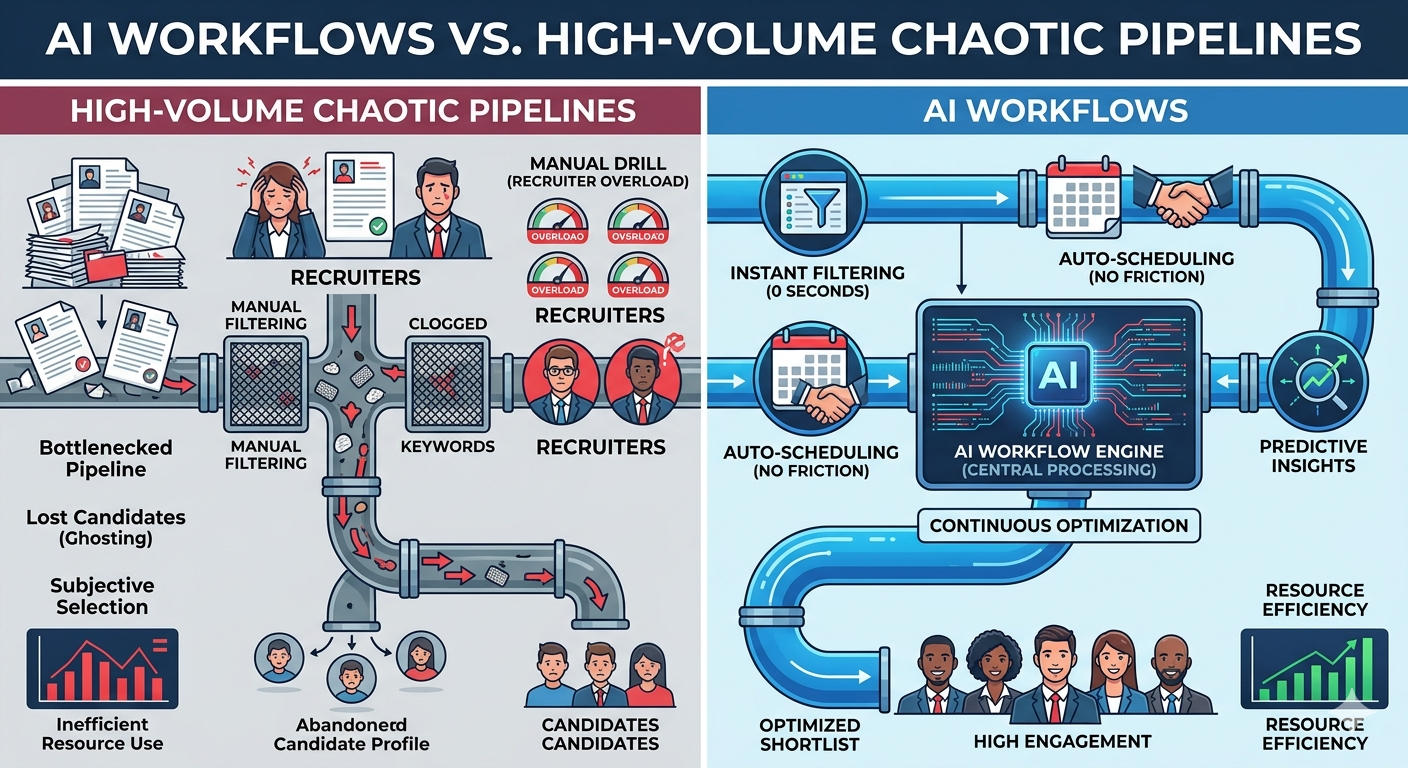
In a chaotic pipeline, success is measured by brute force. When a generic job posting brings in 500+ applications, the process immediately begins to stall under its own weight.The Resume Black Hole: Because manual review takes days, the majority of resumes are never looked at. Recruiters review the first 50 to 100 applications out of sheer survival, meaning excellent candidates who applied slightly later are completely ignored.
The Fragmented Tech Stack: Recruiters constantly bounce between disconnected tools—using one tab for sourcing, another for calendar coordination, a spreadsheet for tracking, and their personal inbox for communication. Information frequently falls through the cracks.
Candidate Disengagement: Because the internal team is overwhelmed, candidates receive no feedback or updates. This leads to high drop-off rates among top-tier talent who refuse to wait around in an unresponsive loop.
Inside the AI Workflow: “Recruitment Velocity”
An AI-driven workflow treats hiring like an optimized, continuous assembly line where data flows seamlessly and the machine eliminates the administrative friction.
Step 1: Automated Triage
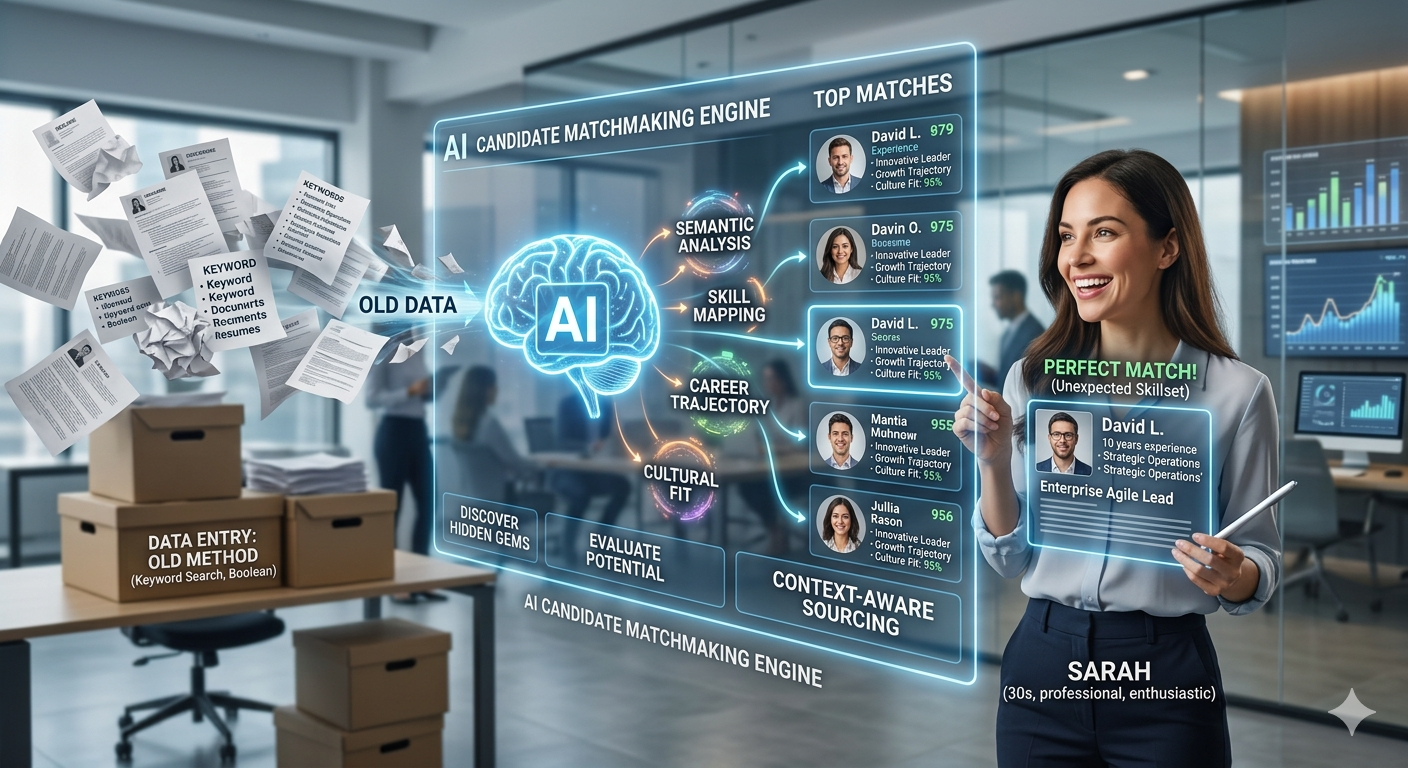
The moment an application hits the system, a semantic parser converts it into a uniform, rich profile. The AI candidate scoring engine instantly grades the profile against predefined, structured job competencies. The chaotic "pile" is replaced by an ordered, prioritized queue.
Step 2: Autonomous Nurturing & Scheduling
Instead of sitting in limbo, a candidate who matches the criteria is instantly contacted by a conversational assistant to schedule an interview. If they have routine questions about the company's hybrid policy or benefits, the AI handles them 24/7.
Step 3: Predictive Interview Engineering
Before the recruiter or hiring manager even hops on the call, the AI delivers an interview kit. It highlights exactly why the candidate scored highly and flags the 2 or 3 missing context pieces the recruiter should probe during the human interview.Why the Shift Changes the Game
Why the Shift Changes the Game
Moving from a chaotic pipeline to an AI workflow yields huge benefits for your business:
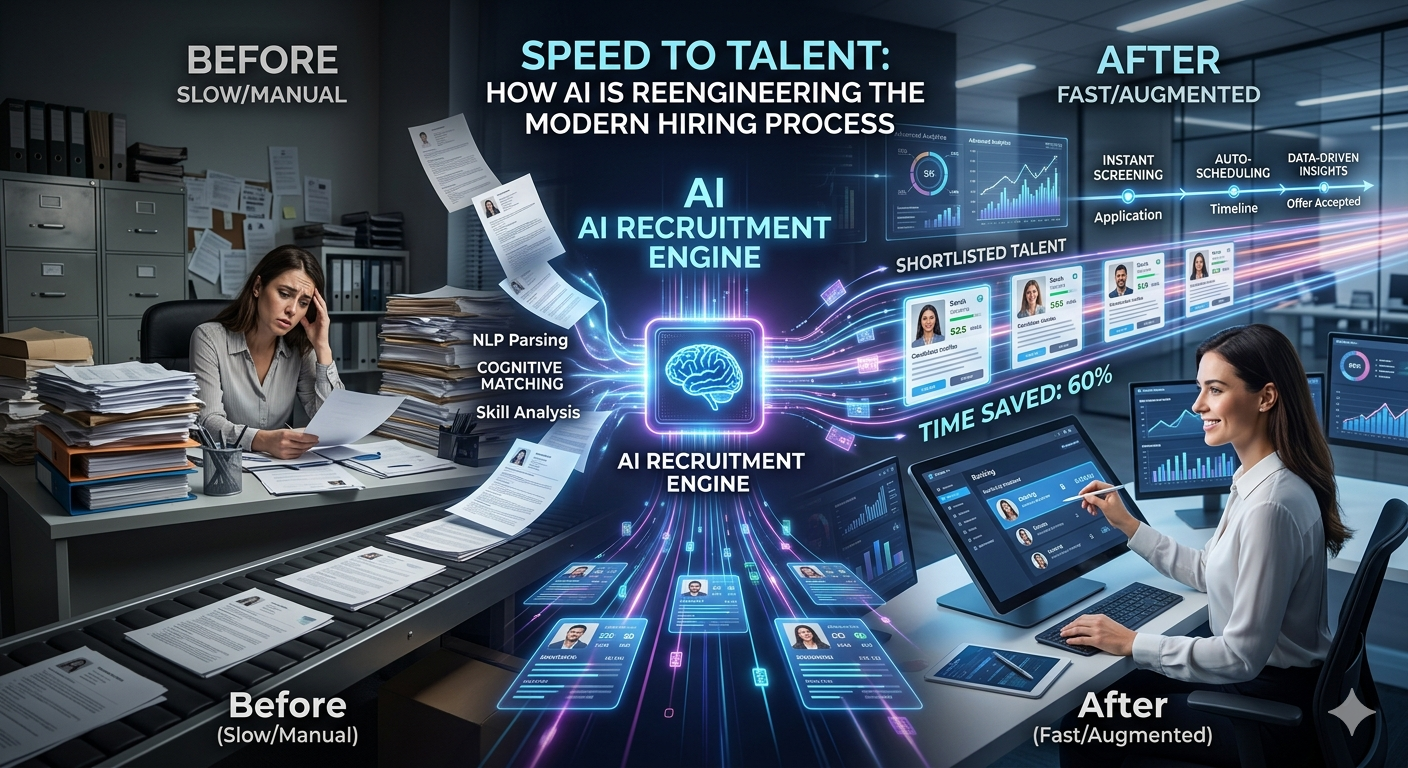
The Metric that Matters: Transitioning to an AI-driven workflow typically slashes manual screening times by 60% to 70%, allowing companies to achieve true Recruitment Velocity —capturing top-tier talent before competitors even finish sorting their inbox.
By letting the technology enforce the structure, the recruiting process transforms. It goes from a frantic race against a cluttered inbox to a structured, scalable framework centered on human relationships.