The Headhunter Is Being Hunted
AI is reshaping executive search from the ground up — and the firms that thrive will be those that figure out what machines still can't do.

There is an old cliché in executive recruiting: the best headhunters know things nobody writes down. They know who is quietly unhappy, who is about to be pushed out, who has the political capital to actually lead a transformation. That tacit intelligence — gathered over years of relationship-building, coffees, and careful listening — was supposed to be the moat that protected the profession from automation.
That moat is now considerably narrower.
87%of companies now use AI-driven tools in their hiring process
38%of recruiter time previously lost to interview scheduling alone
1 in 50AI investments actually deliver transformational value
The machine enters the briefing room
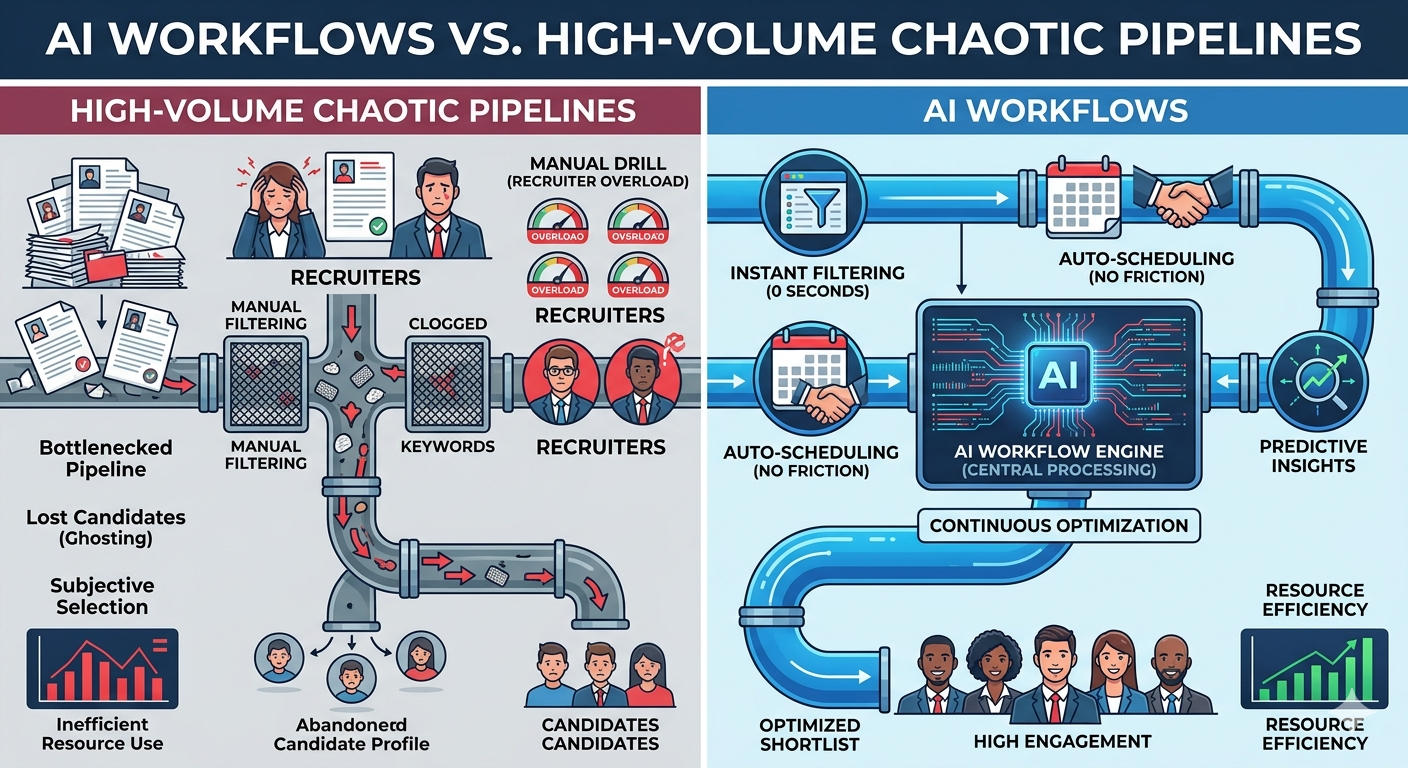
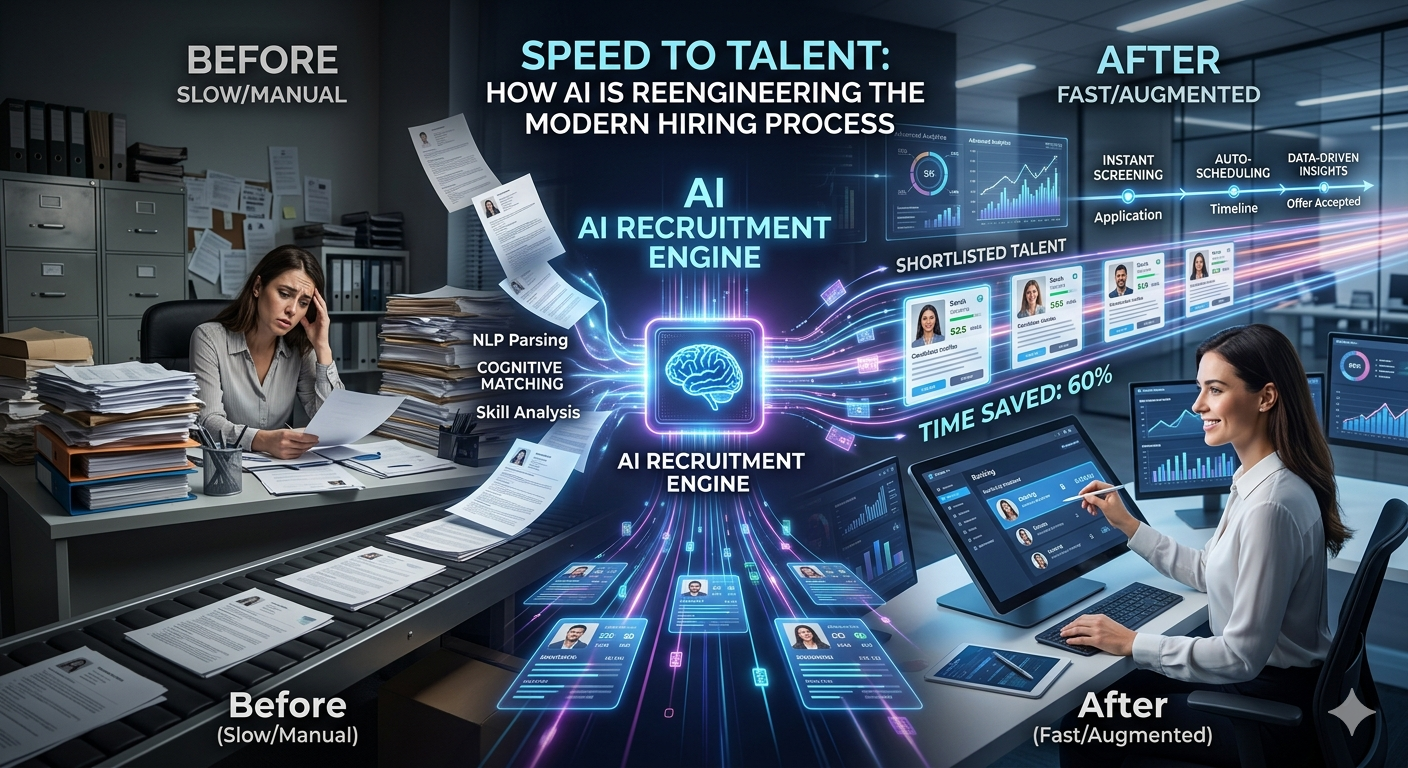
For the past two years, AI in recruiting largely meant CV screening and calendar automation. Useful, unglamorous, easy to dismiss as plumbing. In 2026, the picture is fundamentally different. Agentic AI systems now handle end-to-end sourcing workflows — mapping talent markets, ranking passive candidates, drafting personalised outreach, and scheduling first-stage conversations — without a human ever touching the keyboard.
What has changed is not just capability but adoption velocity. The share of companies using AI in hiring doubled from 26% to 53% in a single year. At major search firms, AI agents run the first cut of every longlist. The human recruiter sees only the shortlist — and even that comes annotated.
"AI handles speed, scale, and signal detection. Humans focus on context, empathy, and strategic decision-making."
2026 TA Industry Report
Skills beat surnames — and AI knows it
Perhaps the most consequential shift is the collapse of the traditional proxy hierarchy. Degrees, prestigious employers, and conventional titles — the "good surnames" of the CV world — are losing their screening power. Skills-based hiring has become the norm, not the aspiration.
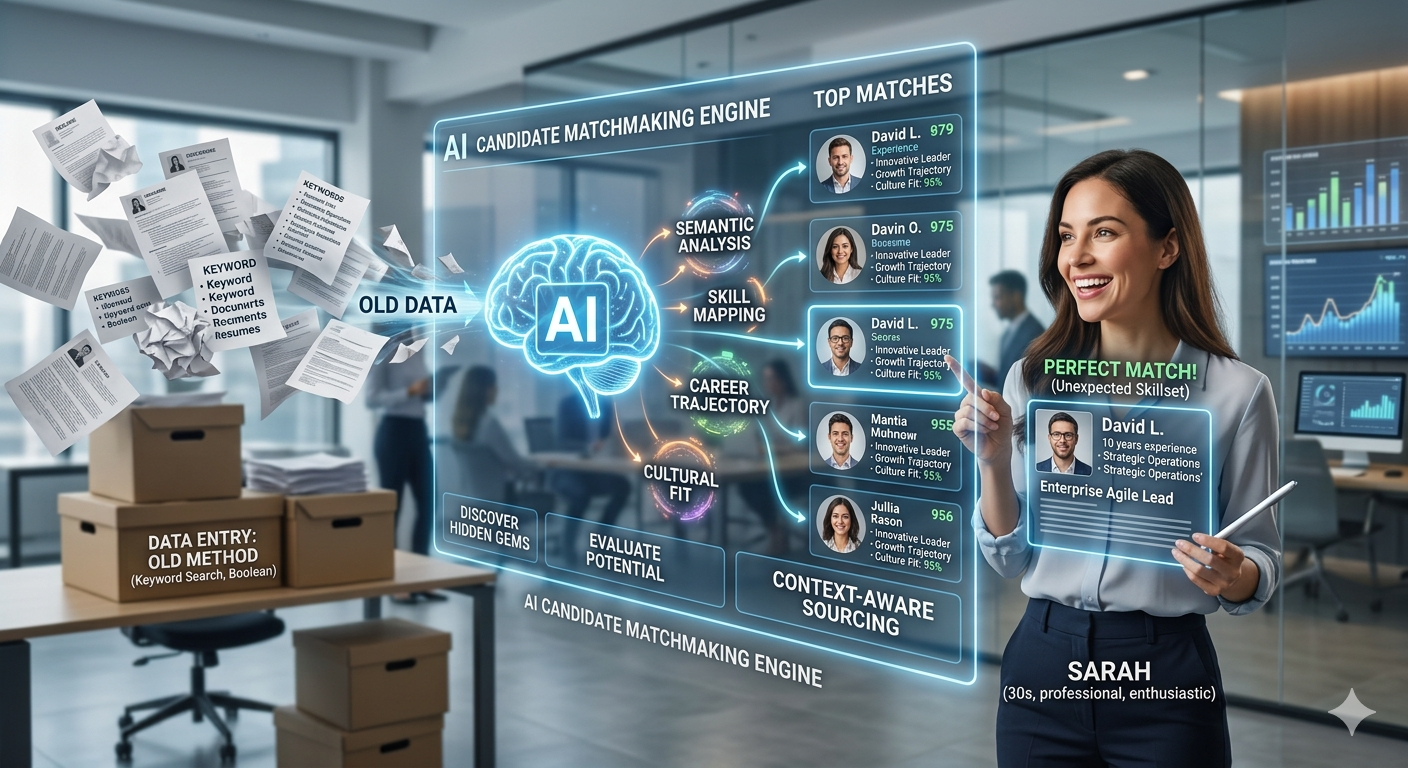
AI makes this practical. A model trained on actual performance data can surface a candidate who spent six years in a mid-sized regional firm but has demonstrably built and scaled sales organisations — something a keyword search or a pattern-matching human would miss. The talent pool, properly interrogated, turns out to be far larger than the usual shortlists ever suggested.
This is a genuine democratisation story — but it cuts both ways. The executive who got hired because of their brand-name MBA now faces a talent market that is running a more honest audit.
The platforms are consolidating fast
What's happening in the market right now
NowSAP, LinkedIn, and a handful of enterprise HR platforms have absorbed the best point-solution AI tools. Standalone screening tools are being commoditised out of existence.
12 moComprehensive talent intelligence platforms will predict candidate market moves — flagging who is "pre-mobile" before they update their LinkedIn status. Headhunters who see this feed first will own the call.
BeyondRegulatory frameworks in the EU and UK will mandate explainability for any AI-assisted hiring decision above a certain seniority threshold. Compliant, auditable systems become table stakes.
The trust paradox
Here is the tension nobody talks about publicly: the more AI enters the process, the more candidates crave a human on the other end of the phone. In executive search, where a move carries career-defining stakes, that craving becomes acute. A well-drafted AI outreach message can open a door. It cannot build the trust that makes a candidate say yes to a conversation they were not expecting.
Speed and signal detection are genuine AI strengths. But the work that actually closes mandates — understanding a board's unstated anxieties, navigating a candidate's complex family situation, reading a culture through two hours in a lobby — that remains irreducibly human. The firms discovering this the hard way are those that automated too deeply, too fast, and now have pipelines full of technically qualified candidates who feel like they are being processed, not recruited.
What the best firms are doing differently
The headhunters pulling away from the field right now share one structural insight: AI is a co-pilot, not an autopilot. They use models to compress the first 80% of search time — market mapping, initial outreach, scheduling, status updates — so their senior consultants can spend proportionally more hours on the 20% that machines cannot replicate: the strategic counsel, the relationship depth, the judgment call about whether this candidate's management style will survive contact with that particular leadership team.
They are also investing in AI literacy as a hiring criterion for their own recruiters. The new job description for a consultant at a serious search firm includes something that would have seemed absurd three years ago: the ability to supervise and interrogate AI outputs. Not to trust them uncritically. To know when the model is pattern-matching correctly and when it is confidently wrong.
The bottom line
The headhunters who will thrive in 2026 and beyond are not the ones who resist AI, nor the ones who hand the wheel to it. They are the ones who use it to become faster, wider, and more rigorous — while staying very deliberately human in the moments that matter. The machine can find the candidate. Only the human can make them want to say yes.